“Look, I’ve been doing this for 20 years. There just aren’t that many disabled people in Australia.”
The person who said this to me in late 2017 was wrong, of course. There are “that many” disabled people in Australia, and I took great satisfaction in proving it to him a few months later over the course of two summery February weekends. But the attitude behind his words- “I haven’t seen it, so it must not exist” remains universally common. It’s impact on disability access is catastrophic.
Disability is context-specific. The presentation and severity changes based on the situation. I have a vertigo disorder. I can walk down a hallway just fine, but put me on an elevator for more than 10 stories or on the top floor of a building built to sway in the wind and you’ll see the impact of my malformed inner ear. My best friend has POTS and EDS. She can build you an entire fantasy world out of words, but re-organizing just one of her many bookshelves can leave her bedridden for days. How disabled she and I “look” at any given moment depends heavily on our environment. This is true for nearly every disabled person that I have met, and I’ve met a lot in my 13 years of experience at 100+ events.
When the environment is inaccessible, one of two things happens. Sometimes you see a sharp increase in severity. This can look like more people needing priority seating on the bus, more people struggling to regulate themselves and their behavior in crowds, and more people applying for IEPs and 504 plans at school. This sometimes gets attributed to people faking or playing up a disability to get special treatment. I can say that 99.9% of the time, it’s because people are more stressed out and disabled bodies betray us way quicker when they’re stressed.
The other thing that happens is that disabled people don’t show up at all. When you live with a chronic disability, you get really good at looking up information ahead of time. You also get really good at spotting clues that a place or event is not going to be accessible for you. Being disabled is hella expensive (that’s a post for another time), so when you know that attending is going to bring you more misery and pain than joy, you save those few spare dollars. You become part of an audience that is never seen and never counted.
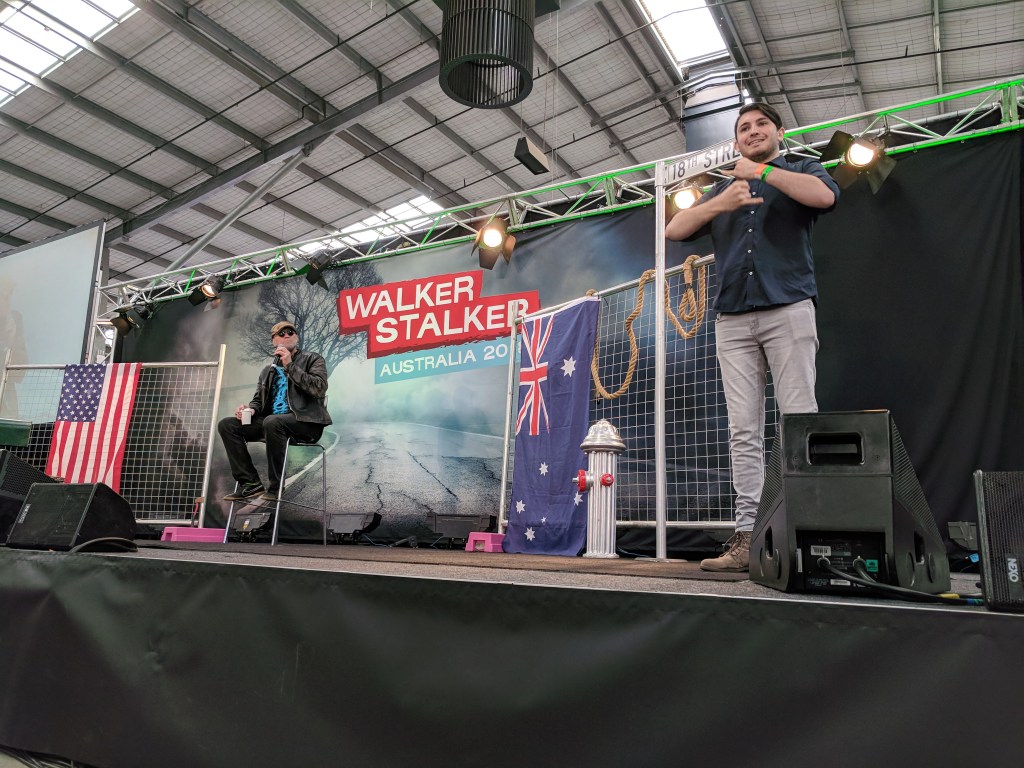
If you are not pulling in disabled people to your space, it is not because we do not exist. It is because your space is not accessible and we know it. When you build an accessible environment, you will find your missing audience. This story does have a happy ending. That tour promoter watched my team and I serve 150 disabled attendees on the first weekend of our two-week run and over 250 on the second, accounting for nearly 10% of the total convention attendance. After the last panel on the last day, he sat down next to me on the edge of the stage where I was chatting with the AUSLAN interpreters whose hiring had sparked the situation. He glanced over the still-heavy crowd of people in the convention hall, all busy queuing for that last autograph or perusing the vendor alley for the perfect collectible. Then he looked at me and said the other phrase that still echoes in my head 7 years later: “you were right.”
 Phoenix Accessibility Consulting & Training